
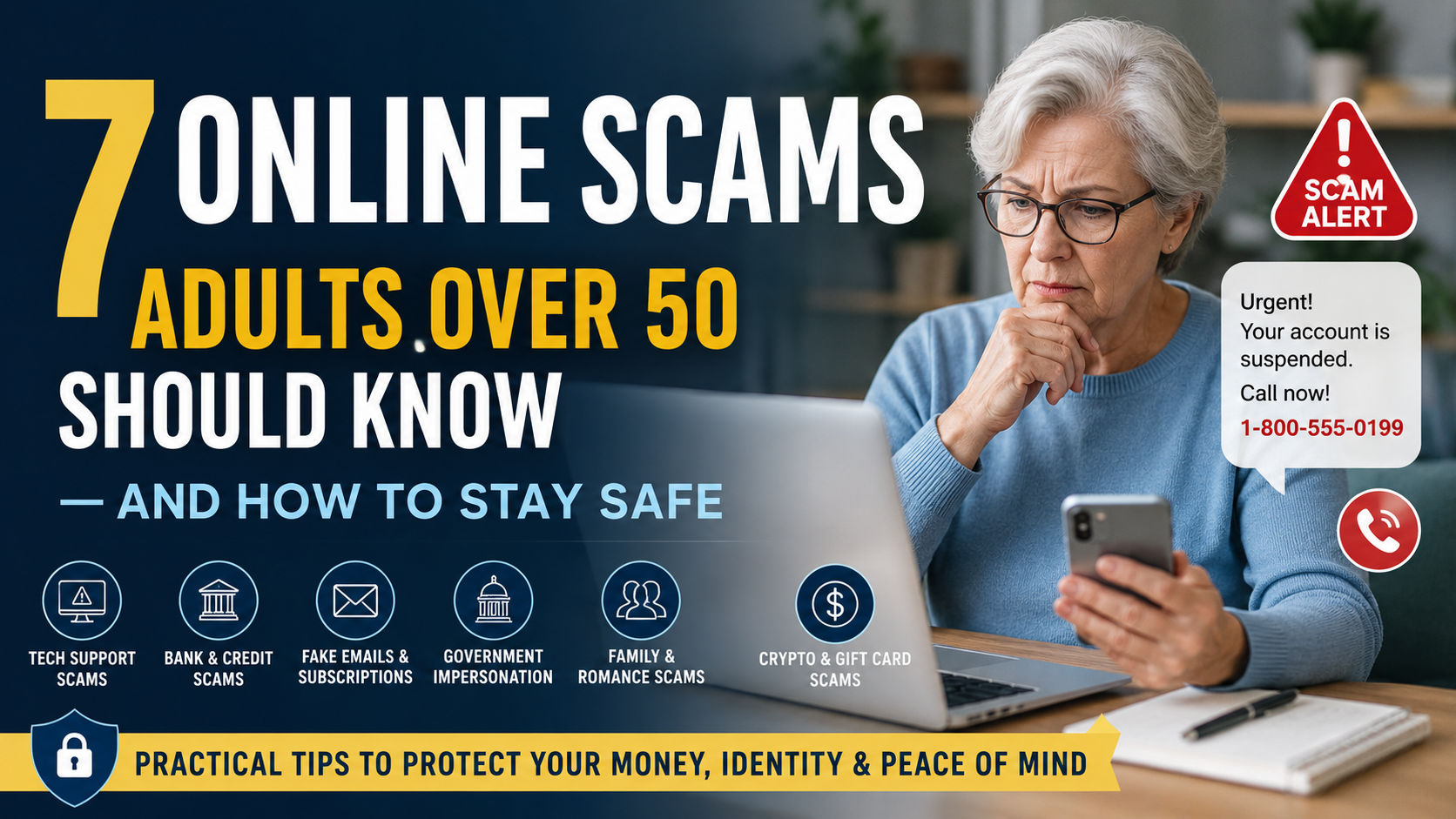
Online safety for seniors is increasingly important as scams become more convincing. Criminals may pretend to be banks, government agencies, technology companies, delivery services, or even family members.
The most important rule is simple: when someone pressures you to act immediately, stop before sending money or giving personal information.
Here are seven common scams adults over 50 should recognize.
1. Tech Support Scams
A warning suddenly appears on your computer saying that your device has a virus or security problem. It may tell you to call a phone number immediately.
A legitimate company generally will not unexpectedly contact you and demand remote access to your computer or immediate payment to fix a supposed problem.
What to do: Close the message without calling the number. If you are concerned about your computer, contact the company through its official website or a trusted computer professional.
2. Bank and Credit Card Scams
Scammers may call, text, or email pretending to represent your bank or credit card company. They may claim that suspicious activity has been detected and ask you to verify your password, PIN, account number, or security code.
What to do: Do not use the phone number or link in the message. Contact your bank directly using the number printed on the back of your card or through its official app or website.
3. Fake Emails and Subscription Scams
You may receive an email saying that a subscription has been renewed, an expensive purchase was made, or your account will be suspended.
The message is designed to make you panic and click a link or call a fraudulent number.
What to do: Do not click unexpected links or open unfamiliar attachments. Go directly to the company’s official website or app and check your account there.
4. Government Impersonation Scams
Scammers sometimes pretend to represent government agencies and claim that you owe money, have a problem with your benefits, or face legal consequences unless you pay immediately.
They may also manipulate caller ID to make the call appear legitimate.
What to do: Do not provide personal information or payment during an unexpected call. Hang up and independently contact the government agency using its official contact information
5. Family and Romance Scams
A scammer may pretend to be a child, grandchild, relative, or romantic partner who urgently needs money.
Some scammers use information found online to make their stories sound convincing.
What to do: Before sending money, contact the family member directly using a phone number you already know. Ask questions that a stranger would have difficulty answering.
6. Gift Card and Cryptocurrency Scams
Be extremely cautious whenever someone demands payment using gift cards, cryptocurrency, wire transfers, or other difficult-to-reverse payment methods.
A scammer may tell you to purchase gift cards and provide the numbers from the back of the cards.
What to do: Never send payment simply because someone is threatening you or creating an emergency. Stop and independently verify the situation first.
7. Bitcoin ATM and Cryptocurrency Scams
Some criminals instruct victims to withdraw cash and deposit it into a Bitcoin ATM or cryptocurrency kiosk. They may claim this is necessary to protect your money, pay a government agency, or resolve a security problem.
What to do: Do not deposit money into a cryptocurrency ATM at the direction of an unexpected caller or message. Contact your bank, the organization involved, or someone you trust before taking action.
ONLINE SAFETY FOR SENIORS: 5-MINUTE RULE
If someone unexpectedly asks for money or sensitive information:
Stop. Do not pay. Do not click. Do not provide passwords or security codes.
Take at least a few minutes to verify the situation independently. Call the organization using a telephone number you obtain yourself—not the number provided by the person contacting you.
If you believe you have already been scammed, contact your bank or credit card company immediately. You can also report suspected fraud to the Federal Trade Commission at ReportFraud.ftc.gov.
Final Thought
Scammers succeed by creating fear, urgency, and confusion. Slowing down and independently verifying a request can prevent an expensive mistake.
Before you send money, share personal information, or allow someone access to your computer, stop and verify who you are dealing with.
Federal Trade Commission (FTC) — Scams Affecting Older Adults
Official information about scams targeting older adults, common warning signs, and how to report fraud.
Cybersecurity and Infrastructure Security Agency (CISA) — Secure Our World
Practical online safety guidance on phishing, strong passwords, multifactor authentication, and software updates.