
Information reviewed: September 25, 2026
Key Takeaways
If you live alone after 60, emergency preparation is not only about food, water, flashlights, or a medical alert button.
Someone you trust should also be able to quickly answer a few practical questions if you are sick, injured, unable to communicate, evacuated from your home, or otherwise need help:
- Who should be contacted?
- What medications or allergies matter?
- Do you use equipment or need help moving or communicating?
- Is there a pet that needs care?
- Where are important documents kept?
- Who has access to the home?
- What information is safe to see quickly — and what information should stay protected?
The goal is not to leave your private life open for anyone to see.
The goal is to create a simple system so that the right person can find the right information when it matters.
Living Alone Requires More Than an Emergency Kit
Living alone can support independence, privacy, and control over your daily life.
But it can also create a practical problem during an emergency:
What happens if you cannot explain what you need?
A family member, neighbor, caregiver, emergency responder, or trusted friend may need to help.
The American Red Cross recommends that older adults identify helpers, create a support network, prepare emergency contacts, keep medical information current, plan for medication and power needs, and organize important documents. American Red Cross
CDC emergency-planning guidance similarly emphasizes making a contact list, planning around individual needs, preparing for evacuation and transportation, and sharing the plan with people who may provide support. CDC
But there is another question that is easy to overlook:
If someone came to help you today, would that person know where to find the information they need?
That is the focus of this guide.
Watch: How to Build an Emergency
Preparedness Kit
This short American Red Cross video shows practical emergency supplies you can keep together so they are easier to find at home or take with you if you need to evacuate.
Tip for older adults: Keep emergency contacts, important medical information, medications, and mobility-related supplies where they can be found quickly.
1. Choose a Primary Helper — and a Backup
Start with one trusted person who would be likely to help if something happened.
This could be:
- An adult child
- A sibling
- A trusted neighbor
- A close friend
- A caregiver
- Another reliable person
Then choose a backup.
CDC recommends creating a contact list that may include family, friends, neighbors, and care providers, and making sure those people understand what support may be needed. CDC
A person does not automatically gain authority over your healthcare, money, accounts, or legal decisions simply because you list them as an emergency contact.
For this article, their role is much simpler:
Know how to reach you, know where basic emergency information is kept, and know who else should be contacted.
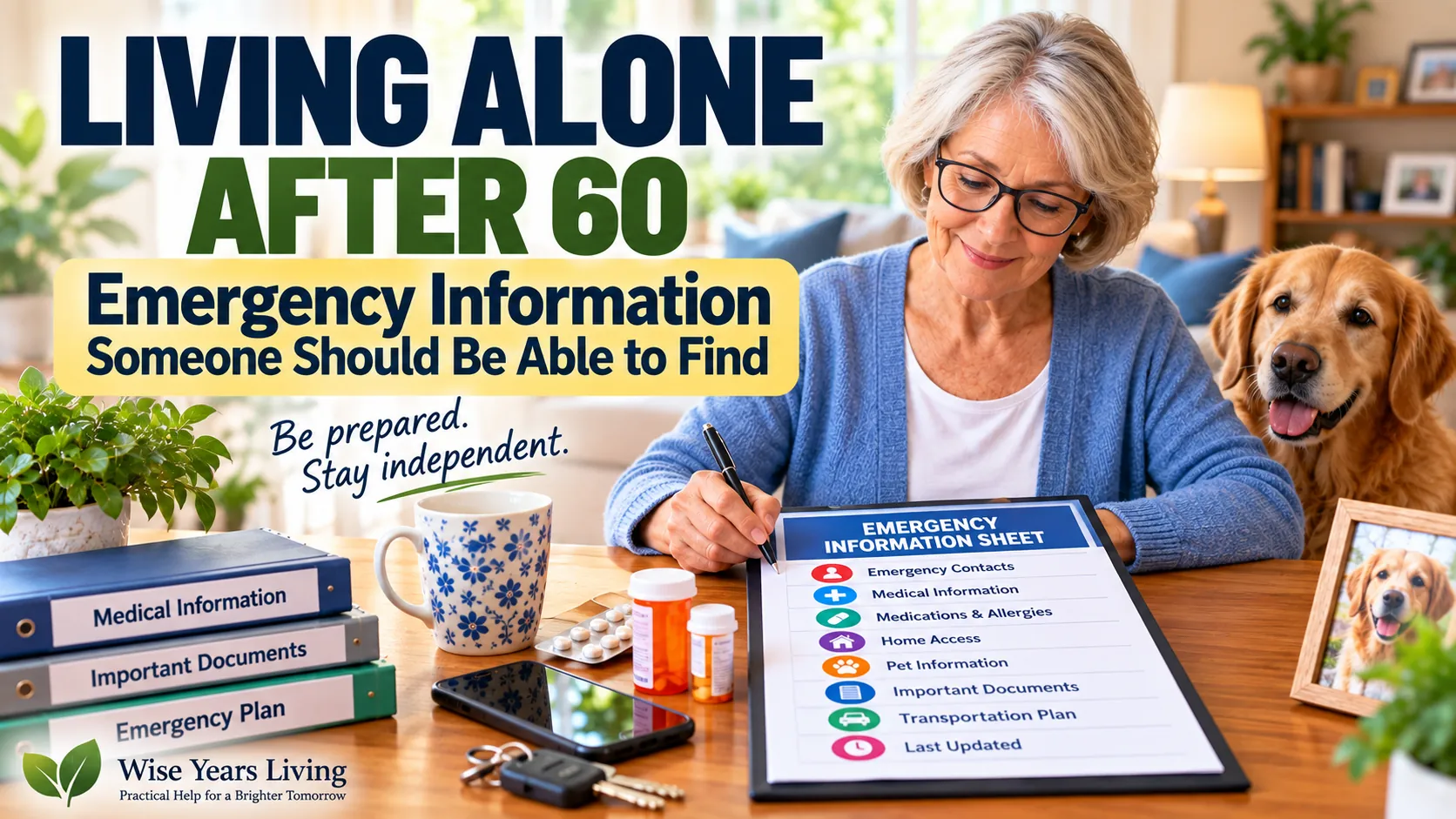
2. Create One Quick Emergency Information Sheet
Your first sheet should contain information that may be useful quickly.
Consider including:
- Full name
- Date of birth
- Primary emergency contact
- Backup emergency contact
- Primary care clinician
- Important specialist, if relevant
- Preferred pharmacy
- Current medications
- Serious allergies
- Important medical conditions
- Health insurance plan or card location
- Mobility needs
- Hearing or vision needs
- Communication needs
- Medical equipment
- Pet information
- Location of more detailed documents
- Date the sheet was last updated
The Red Cross recommends maintaining an up-to-date list of medical conditions, allergies, medications, prescription information, doctors, and insurance cards. American Red Cross
The sheet should be easy enough to understand that another person can use it without having to search through drawers, old paperwork, or several different notebooks.
3. Use a Two-Level Information System
This is one of the most important parts of the WYL approach.
Not everything should be kept together.
Level 1 — Quick Emergency Information
This is information a helper may need quickly:
- Emergency contacts
- Medication list
- Allergies
- Doctors
- Pharmacy
- Important support needs
- Medical equipment
- Pet information
- Where additional documents are stored
Level 2 — Secure Documents and Sensitive Information
This may include:
- Social Security information
- Bank and investment records
- Full account numbers
- Tax records
- Legal documents
- Insurance policies
- Property records
- Passwords and PINs
- Copies of identification
CFPB recommends organizing important documents in a safe but accessible location and letting trusted people know where they can be found. It specifically recommends keeping passwords and PINs securely stored rather than treating them like ordinary emergency notes. Consumer Financial Protection Bureau
Do not put highly sensitive financial or identity information on a sheet that is openly visible in your home.
The trusted helper may need to know where secure information is, not necessarily see or possess all of it in advance.
4. Keep Your Medication Information Current
If you cannot speak for yourself, an accurate medication list may be much more useful than relying on memory or searching through bottles.
Include:
- Medication name
- Strength, if known
- How often you take it
- Prescription medications
- Important over-the-counter medicines
- Relevant vitamins or supplements
- Serious medication allergies
The Red Cross advises older adults to keep current medical information and plan for access to medications during emergencies. American Red Cross
Update the list whenever something changes.
5. Write Down Mobility and Communication Needs
This information may be just as important as a medication list.
A helper may need to know that you:
- Use a cane or walker
- Use a wheelchair
- Have difficulty climbing stairs
- Need help transferring
- Use hearing aids
- Have limited vision
- Communicate better in a particular language
- Need written instructions
- Need extra time to understand spoken instructions
- Use an assistive device
CDC recommends creating an emergency plan based on the person’s actual support and communication needs rather than relying on a generic plan. CDC
If pictures or simple written instructions help you communicate, CDC also notes that they can be included in an individual emergency plan. CDC
6. Make a Plan for Equipment and Electricity
Some people depend on equipment that may be affected by a power outage.
Examples can include:
- CPAP equipment
- Powered mobility devices
- Refrigerated medications
- Oxygen-related equipment
- Hearing-device chargers
- Other assistive or medical devices
Red Cross guidance specifically recommends backup planning when medical devices or medicines depend on electricity or refrigeration. American Red Cross
CDC also recommends planning how equipment will be powered, transported, replaced, or used during evacuation. CDC
Write down:
- What equipment you use
- Where it is kept
- Whether it needs electricity
- Whether backup batteries or chargers exist
- Who to contact for equipment assistance
7. Decide How Someone Could Safely Enter Your Home
An emergency helper may know you need help but still be unable to reach you.
Consider:
- Who has a spare key?
- Is there a trusted neighbor nearby?
- Does your building have a manager or front desk?
- Are there building access procedures?
- Is there another safe method for authorized access?
Do not place alarm codes, door codes, passwords, or other security information somewhere strangers could easily see them.
Instead, make sure your trusted helper knows how authorized access is handled.
This is another example of the two-level system: the emergency sheet can say who has access without displaying the actual security credentials.
8. Include a Plan for Pets
If you live alone with an animal, the pet may depend entirely on you.
Write down:
- Pet’s name
- Type of animal
- Veterinarian
- Feeding information
- Medications
- Where food is kept
- Location of leash, carrier, or crate
- Backup caregiver
- Emergency contact for the pet
CDC recommends including pets, service animals, or emotional-support animals when creating an individualized emergency plan. CDC
Red Cross guidance likewise recommends including pet food, medication, carriers, leashes, and other supplies in emergency planning. American Red Cross
9. Think About Transportation Before You Need It
A plan should answer more than “Where would I go?”
It should also answer:
How would I get there?
Think about:
- Who could drive you
- Whether you can enter and exit a vehicle easily
- Whether you need accessible transportation
- Whether you use a wheelchair or mobility device
- Where you could go if your home became temporarily unsafe
CDC recommends identifying multiple places you could go and planning transportation in advance, especially when accessible transportation may be needed. CDC
Do not assume that your usual transportation will always be available during a major emergency.
10. Organize Important Documents Without Exposing Them
Important documents may include:
- Identification
- Health insurance information
- Homeowners or renters insurance
- Advance directive, if you have one
- Power of attorney documents, if applicable
- Will location
- Property or lease information
- Financial contacts
- Insurance contacts
- Other important legal or financial records
CFPB recommends keeping important financial documents in a secure, accessible location and telling trusted people where they can be found. Consumer Financial Protection Bureau
Red Cross preparedness guidance also recommends locating, copying, and protecting important personal, financial, legal, and medical documents. American Red Cross
The goal is organized access, not public exposure.
11. Keep a Backup Outside the Home
An emergency could make your home inaccessible.
Examples include:
- Fire
- Flood
- Earthquake
- Evacuation
- Building damage
Consider keeping an appropriate backup:
- With a trusted family member
- With a trusted friend
- In secure digital storage
- In another protected location
Red Cross guidance recommends keeping personal, medical, and financial records safe and accessible, including secure backups. American Red Cross
A backup does not have to contain every sensitive detail.
It should contain enough information to help a trusted person begin assisting you.
12. Make Sure Someone Actually Knows the System
This is the step that can easily be missed.
Creating a beautiful binder does not help if nobody knows it exists.
Tell your trusted helper:
“If something happens to me, my emergency information is kept here.”
Then show them:
- Where the quick sheet is
- Where secure documents are kept
- How to contact your backup person
- What pet or equipment needs may exist
- What they should not share with other people
CDC recommends sharing and practicing emergency plans with the people who support you. CDC
13. Review the Information Regularly
Plans become less useful when the information is outdated.
Review the sheet whenever:
- A medication changes
- A doctor changes
- Your emergency contact changes
- You move
- Your insurance changes
- You begin using new equipment
- Your mobility or communication needs change
- Your pet situation changes
The Red Cross recommends reviewing and refreshing plans, supplies, and important documents about every six months. American Red Cross
CDC recommends reviewing an individual emergency plan at least annually and when needs change. CDC
For WYL readers, a simple approach is:
Review every six months, and update sooner whenever something important changes.
A 15-Minute Emergency Information Check
You do not need to finish an entire emergency system today.
Start with these seven actions:
- Write down your primary and backup emergency contacts.
- Update your medication and allergy list.
- Add your doctor and pharmacy.
- Write down mobility, hearing, vision, communication, or equipment needs.
- Add pet information if needed.
- Choose where the emergency sheet will be kept.
- Tell one trusted person exactly where to find it.
That gives you a practical starting system in a short amount of time.
If You Are Helping a Parent Who Lives Alone
Do not assume you already know where everything is.
Ask:
- Who should I call first?
- Where is your medication list?
- Where are your insurance cards?
- What equipment do you use?
- Who has a key?
- What should happen to your pet?
- Where are important documents kept?
- Is there an advance directive or other legal document, and where is it stored?
- What information should remain private?
- Who is your backup helper?
- What would you need if the power went out?
- How would you leave the home if you had to evacuate?
The goal is not to take away independence.
The goal is to reduce confusion when help is actually needed.
Download: Living Alone Emergency Information Sheet
Wise Years Living provides a large-print Living Alone Emergency Information Sheet to help adults 60+ and family caregivers organize essential information in one place.
The sheet should include space for:
- Primary emergency contact
- Backup emergency contact
- Doctor
- Pharmacy
- Medications
- Allergies
- Important health conditions
- Mobility needs
- Hearing or vision needs
- Communication needs
- Medical or assistive equipment
- Pet information
- Home-access contact
- Transportation plan
- Location of secure documents
- Trusted helper
- Last updated date
What’s included:
- Primary and backup emergency contacts
- Doctor and pharmacy information
- Medications and allergies
- Mobility, hearing, vision, and communication needs
- Medical or assistive equipment
- Pet information
- Home-access contact
- Transportation plan
- Location of secure documents
- Trusted helper
- Last updated date
Important Privacy Reminder
Do not place passwords, PINs, Social Security numbers, full banking credentials, or other highly sensitive financial or identity information on an openly accessible emergency sheet.
Frequently Asked Questions
Should I put my Social Security number on my emergency sheet?
Usually, there is no reason to place a Social Security number on a basic quick-reference emergency sheet.
Sensitive identity information should generally be kept separately and securely.
CFPB recommends organizing important financial and identity information but also keeping sensitive passwords and PINs safely stored. Consumer Financial Protection Bureau
Should my emergency contact have access to my money?
Being an emergency contact does not automatically give someone authority over your finances.
A CFPB “trusted contact,” for example, is someone a financial institution may contact in certain circumstances; that role does not itself give the person access to your money. Consumer Financial Protection Bureau
Legal authority over finances is a separate matter and depends on the arrangement and applicable law.
Should I give someone all my passwords?
Avoid casually sharing passwords or PINs.
If you want someone to be able to manage accounts in the future, consider appropriate secure and legal planning rather than simply handing over login information.
CFPB specifically recommends keeping password and PIN lists secure. Consumer Financial Protection Bureau
What if I do not have family nearby?
Your support network does not have to be limited to relatives.
Depending on your situation, it might include:
- A trusted neighbor
- A close friend
- A caregiver
- A nearby community contact
- Another reliable person
CDC recommends including family, friends, neighbors, and care providers in emergency contact planning. CDC
Do I still need a plan if I wear a medical alert device?
Yes.
NIA explains that emergency medical alert systems can help in some situations, but they must be worn and maintained properly and do not replace regular check-ins by family, friends, or caregivers. NIA
Where should I keep my emergency information sheet?
There is no single location that is right for everyone.
Choose a place that is:
- Easy for you to reach
- Known to your trusted helper
- Protected from casual viewing by strangers
- Separate from highly sensitive passwords or financial information
The important point is not only where it is stored.
Someone you trust must know where to find it.
The Most Important Thing to Remember
Living alone does not mean preparing alone.
A useful emergency system allows a trusted person to quickly understand:
- Who to contact
- What medications or allergies matter
- What support you need
- What equipment you depend on
- Whether a pet needs care
- How authorized home access works
- Where important documents are kept
- Who else can help
You do not need to give up privacy.
You do not need to give someone unrestricted access to your accounts or personal records.
You need a system that makes essential information findable while sensitive information stays protected.
Next Step: Prepare Your Digital Emergency Plan
Your emergency information should be easy for a trusted person to find without exposing your passwords or private accounts.
Read our Digital Emergency Plan After 60 guide to learn what to prepare and how to protect your information.
Sources
American Red Cross — Older Adults Emergency Preparedness
Guidance on support networks, emergency contacts, medication and medical information, power-dependent devices, emergency supplies, evacuation, and key documents.
American Red Cross — Older Adults Preparedness Checklist
Large-print preparedness guidance covering medications, power-dependent equipment, pets, and protected personal, financial, and medical records.
Centers for Disease Control and Prevention — Making an Emergency Plan
Guidance on individualized emergency planning, contact networks, communication, transportation, assistive equipment, evacuation, and plan review.
Centers for Disease Control and Prevention — What Is an Emergency Plan? Why Is It Important?
Easy-read guidance on emergency contacts, personal needs, communication, transportation, equipment, and sharing plans with support people.
National Institute on Aging — Services for Older Adults Living at Home
Information about regular check-ins and the strengths and limitations of emergency medical alert systems for older adults living alone.
Consumer Financial Protection Bureau — Planning for Diminished Capacity and Illness
Guidance on organizing important documents, informing trusted people where they are stored, protecting passwords and PINs, and understanding trusted contacts.
General Safety & Educational Notice
This article provides general educational information about emergency preparedness and independent living. Individual medical, legal, financial, housing, security, and emergency-planning needs vary. It does not replace individualized advice from healthcare professionals, attorneys, financial professionals, emergency services, local authorities, or other qualified professionals when appropriate. If you are experiencing an immediate emergency, call 911 or follow instructions from local emergency authorities.