
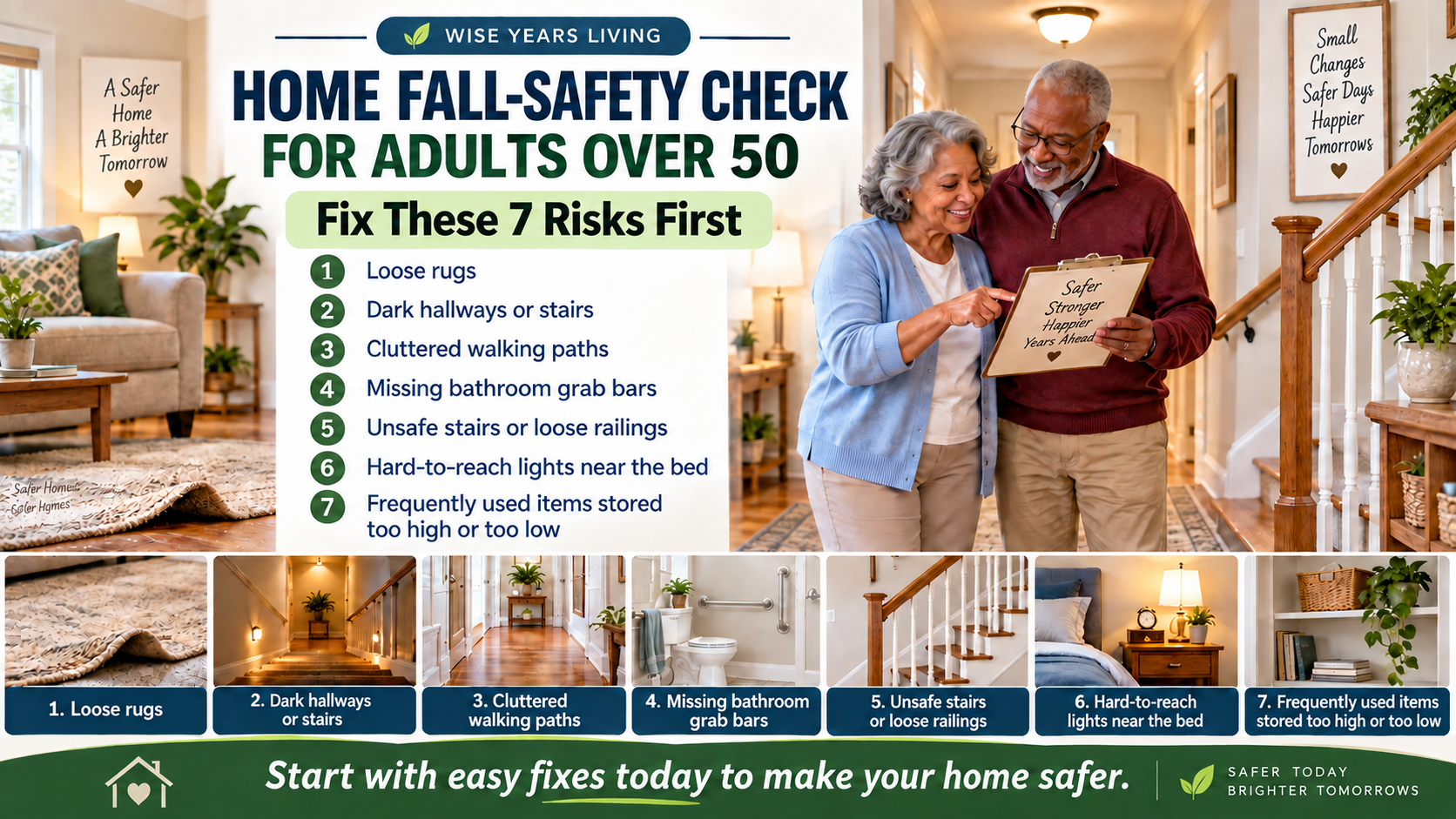
Falls often happen because of small hazards at home that are easy to miss. The good news is that many of these risks can be reduced with a few simple changes. Start with the seven items below — they are some of the first things worth checking in any home used by an adult over .
Fix These 7 Risks First
1. Loose Rugs
Check:
Look for throw rugs, small mats, or rug corners that slide, curl up, or bunch under your feet.
Fix:
Remove loose rugs when possible. If you keep them, use a non-slip backing or secure the edges so they stay flat.
Why it matters:
Loose rugs can catch a foot or shift suddenly, especially when walking quickly, turning, or getting up at night.
2. Dark Hallways or Stairs
Check:
Look for hallways, stairways, and entry areas that are dim, especially at night.
Fix:
Add brighter bulbs where needed and use easy-to-reach light switches or night lights. Make sure stairs are well lit from both the top and bottom.
Why it matters:
Poor lighting can make it harder to see steps, objects, or changes in floor level, increasing the chance of a fall.
3. Cluttered Walking Paths
Check:
Look for shoes, bags, cords, boxes, pet items, or furniture that narrow the path you normally walk through.
Fix:
Keep walking paths clear and wide enough to move through without stepping around objects. Secure cords along walls and move frequently used items out of the way.
Why it matters:
Even small objects can become trip hazards, especially when you are carrying something, walking at night, or not looking directly at the floor.
4. Missing Bathroom Grab Bars
Check:
Look at the bathtub, shower, and toilet area. Notice whether there is a sturdy place to hold when stepping in, standing up, or changing position.
Fix:
Install properly secured grab bars where extra support is needed. Do not rely on towel racks or soap holders for balance.
Why it matters:
Bathrooms can become slippery, and having a stable handhold can make it easier to move safely and recover your balance.
5. Unsafe Stairs or Loose Railings
Check:
Look for loose handrails, uneven steps, worn edges, or objects left on the stairs.
Fix:
Repair loose railings and damaged steps. Keep stairs completely clear, and use handrails whenever possible.
Why it matters:
Stairs can become especially dangerous when a handrail moves, a step is uneven, or something blocks your path.
6. Hard-to-Reach Lights Near the Bed
Check:
Make sure you can turn on a light before getting out of bed, especially at night.
Fix:
Keep a lamp, light switch, or easy-to-use night light within reach of the bed. Make sure the path from the bed to the bathroom is well lit.
Why it matters:
Getting up in the dark can make it harder to see furniture, rugs, or changes in floor level, increasing the risk of a fall.
7. Frequently Used Items Stored Too High or Too Low
Check:
Look at the items you use every day in the kitchen, bathroom, bedroom, and closets. Notice whether you need to stretch, bend deeply, or stand on something to reach them.
Fix:
Move frequently used items to easy-to-reach shelves between about waist and shoulder height. Avoid using chairs or unstable stools to reach high places.
Why it matters:
Reaching too high, bending too far, or climbing on furniture can make you lose your balance and increase the chance of a fall.
8.Watch: 6 Steps to Prevent a Fall
Prefer to watch? This video from the National Council on Aging explains six simple steps older adults can take to reduce fall risk and stay independent.
Quick Takeaway
Start with the easiest hazards you can fix today. Remove trip hazards, improve lighting, and make sure you have stable support in key areas such as the bathroom and stairs.
Support Your Balance and Strength Too
A safer home is only one part of fall prevention. Regular balance and leg-strength exercises can also help you move more confidently. For simple exercises you can do at home, see our Fall Prevention Exercises for Adults Over 50.
References
Centers for Disease Control and Prevention (CDC): Check for Safety – A Home Fall Prevention Checklist for Older Adults
https://www.cdc.gov/steadi/pdf/steadi-brochure-checkforsafety-508.pdf
National Institute on Aging (NIA): Preventing Falls at Home: Room by Room