
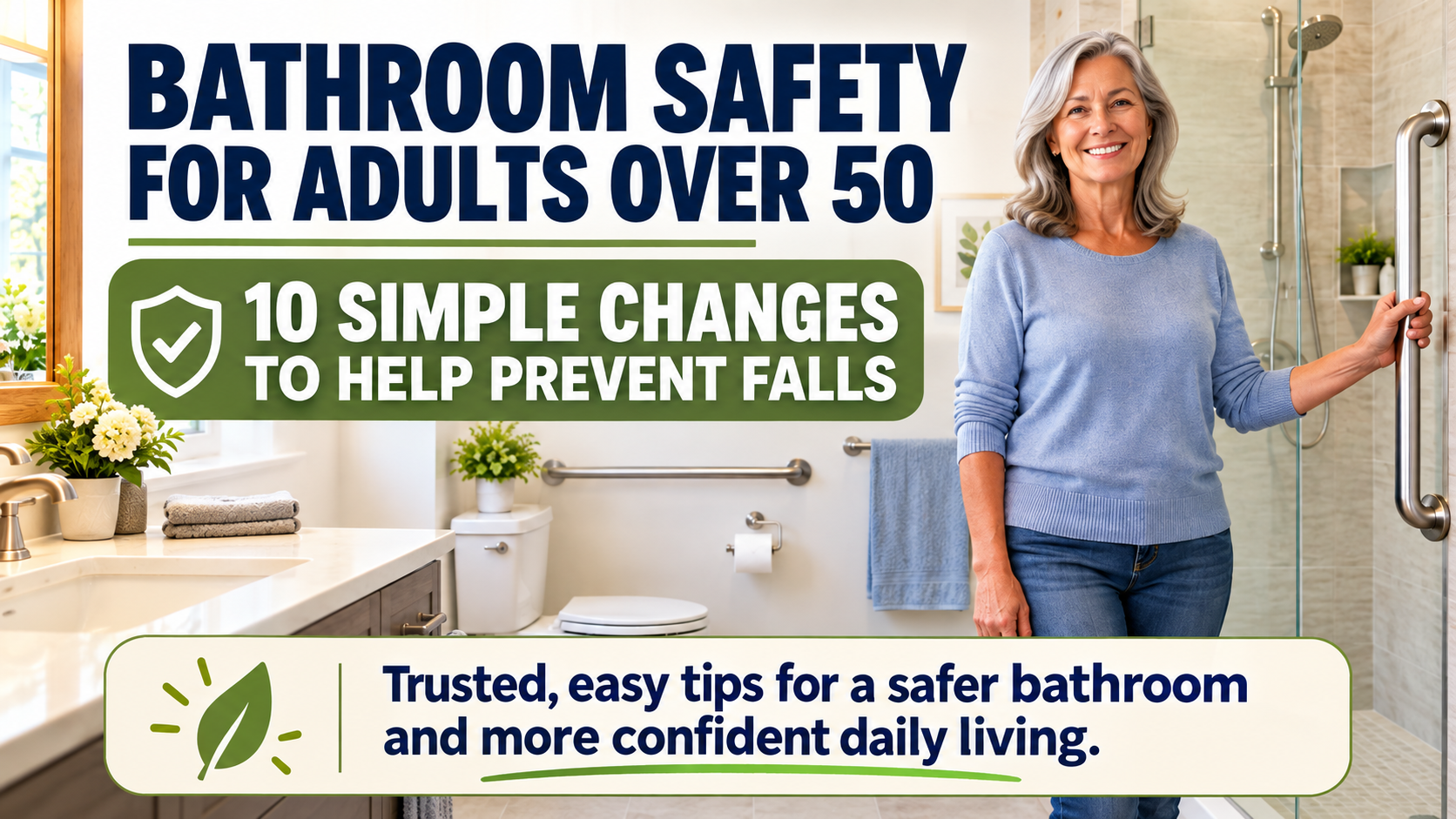
Safety Note: This article provides general educational information. If you have fallen before, often feel dizzy or unsteady, use a cane or walker, or have significant mobility concerns, talk with a healthcare professional, physical therapist, or occupational therapist about the safest setup for you.
A safer bathroom can make everyday life easier and more comfortable. Simple changes such as better lighting, grab bars, non-slip surfaces, and clear walking space can help reduce common fall hazards at home.
Why Bathroom Safety Matters After 50
Bathrooms can become more hazardous because water, smooth surfaces, limited space, and getting in or out of a tub or shower can increase the chance of slipping or losing balance. Making a few practical safety improvements can help create a more secure and comfortable space for everyday use.
1. Add Grab Bars Near the Toilet and Shower
Grab bars can provide extra support when you sit down, stand up, or step in and out of a shower or bathtub. Install them next to the toilet and inside and outside the shower or tub. Make sure they are securely mounted and designed to support body weight. CDC recommends installing grab bars next to the toilet and inside and outside the tub or shower as part of home fall prevention.
https://www.cdc.gov/falls/prevention/index.html
2. Use Non-Slip Surfaces in the Tub or Shower
Wet surfaces can become slippery quickly. Use a secure non-slip mat or slip-resistant strips inside the tub or shower. A non-skid bath mat outside the tub or shower can also provide firmer footing. Make sure any mat lies flat and does not create a new tripping
hazard. https://medlineplus.gov/ency/patientinstructions/000021.htm
3. Keep the Bathroom Floor Dry
Wipe up water and spills as soon as possible. Check for leaks around the sink, toilet, tub, and shower, and keep towels within easy reach so you do not have to walk across a wet floor.
4. Improve the Lighting
Good lighting makes it easier to see wet spots, obstacles, and changes in floor level. Use bright, even lighting in the bathroom and along the path from the bedroom to the bathroom. A night-light can also make nighttime trips safer.
https://www.nia.nih.gov/health/infographics/six-tips-help-prevent-falls
5. Keep Walking Areas Clear
Remove clutter, loose rugs, cords, and other objects that could cause someone to trip. Keep the entrance to the bathroom and the walking path inside it as open as possible, especially if you use a cane or walker.
Source: CDC — Still Going Strong: Prevent Falls
https://www.cdc.gov/still-going-strong/older-adults/index.html
6. Consider a Shower Chair or Bench
If standing in the shower feels tiring or unsteady, a shower chair or bath bench may provide extra stability and comfort. Choose equipment designed for bathroom use and make sure it is stable before using it.
7. Consider a Raised Toilet Seat If Needed
A low toilet can make sitting down and standing up more difficult for some people. A properly installed raised toilet seat may make these movements easier. If you are unsure whether one is appropriate for you, ask a healthcare professional or occupational therapist.
8. Keep Everyday Items Within Easy Reach
Place soap, shampoo, towels, toilet paper, and other frequently used items where you can reach them without stretching, twisting, or climbing on a stool or chair. Keeping everyday items nearby can help reduce unnecessary movements that may affect balance.
9. Stand Up Slowly
Some people feel dizzy or lightheaded when they stand up quickly. Take your time when getting up from the toilet or a shower chair. If dizziness happens often, talk with a healthcare professional because medications or health conditions may contribute.
10. Recheck Bathroom Safety as Your Needs Change
Strength, balance, vision, medications, and mobility can change over time. Review your bathroom periodically and after a fall, injury, surgery, or major change in mobility. If you are unsure what improvements would help most, a physical therapist or occupational therapist can help assess your needs.
Source: American Occupational Therapy Association — Aging in Place
https://www.aota.org/practice/clinical-topics/aging-in-place
Quick Bathroom Safety Checklist
Before you finish, check these basics:
- Grab bars are securely installed where support is needed.
- Tub and shower surfaces are slip-resistant.
- Bathroom floors are kept dry.
- Lighting is bright and easy to reach.
- Walking paths are free of clutter and loose rugs.
- Frequently used items are within easy reach.
- A shower chair or raised toilet seat is used when appropriate.
- Nighttime access to the bathroom is well lit.
Start With One Small Change
You do not have to remodel your entire bathroom at once. Start with the easiest hazards to fix, such as improving lighting, clearing walking paths, drying wet floors, or adding non-slip surfaces.
Small changes can make everyday routines safer and more comfortable.
For a broader home safety review, see our Home Fall-Safety Check for Adults Over 50.
To support balance and leg strength, you can also read our fall prevention exercise guide.